Insights & Resources
Read Our Blogs
Helpful blogs, expert sales tips, and CRM guides written by industry specialists to help grow your business.
Helpful blogs, expert sales tips, and CRM guides written by industry specialists to help grow your business.

It’s a Monday morning. You’re halfway through your first chai when an email lands in your inbox. Your best travel executive, the one who closed more bookings than anyone last season, is resigning.
You’re happy for her, of course. But a few minutes later, a different thought creeps in: where is all her work?
Her client list is saved on her personal phone. Half the quotes are buried in WhatsApp chats. Follow-up dates are scribbled in a notebook, and a few key details exist only in her memory. That couple who paid an advance for their Maldives honeymoon last week? Nobody else knows what was promised to them.
Suddenly, a resignation email feels like a business emergency.
Most travel agencies don’t plan for this moment. Work gets done quickly, deals close fast, and data ends up wherever it’s convenient. A spreadsheet here, a personal Google Drive there, and a lot of chats on someone’s phone.
It works well, right until the day someone leaves.
When client data lives with a person instead of the business, you don’t just lose an employee. You lose:
And if your executive joins a rival agency, those client relationships may follow her there.
Be honest with yourself. If you nod at two or more of these, you’re at risk:
None of this means your team is careless. It means your system, or the lack of one, is doing them no favours.
Spreadsheets are great at storing information. They’re terrible at telling you what to do next.
They won’t remind you that a payment is due tomorrow. They won’t show that a quote was sent three days ago and never followed up. They won’t tell the next person what the client said on the last call. And a WhatsApp chat can’t be handed over cleanly to a new teammate without leaking private conversations or losing context.
As your agency grows, this patchwork gets harder to manage. More leads, more bookings and more team members mean more places for things to slip.
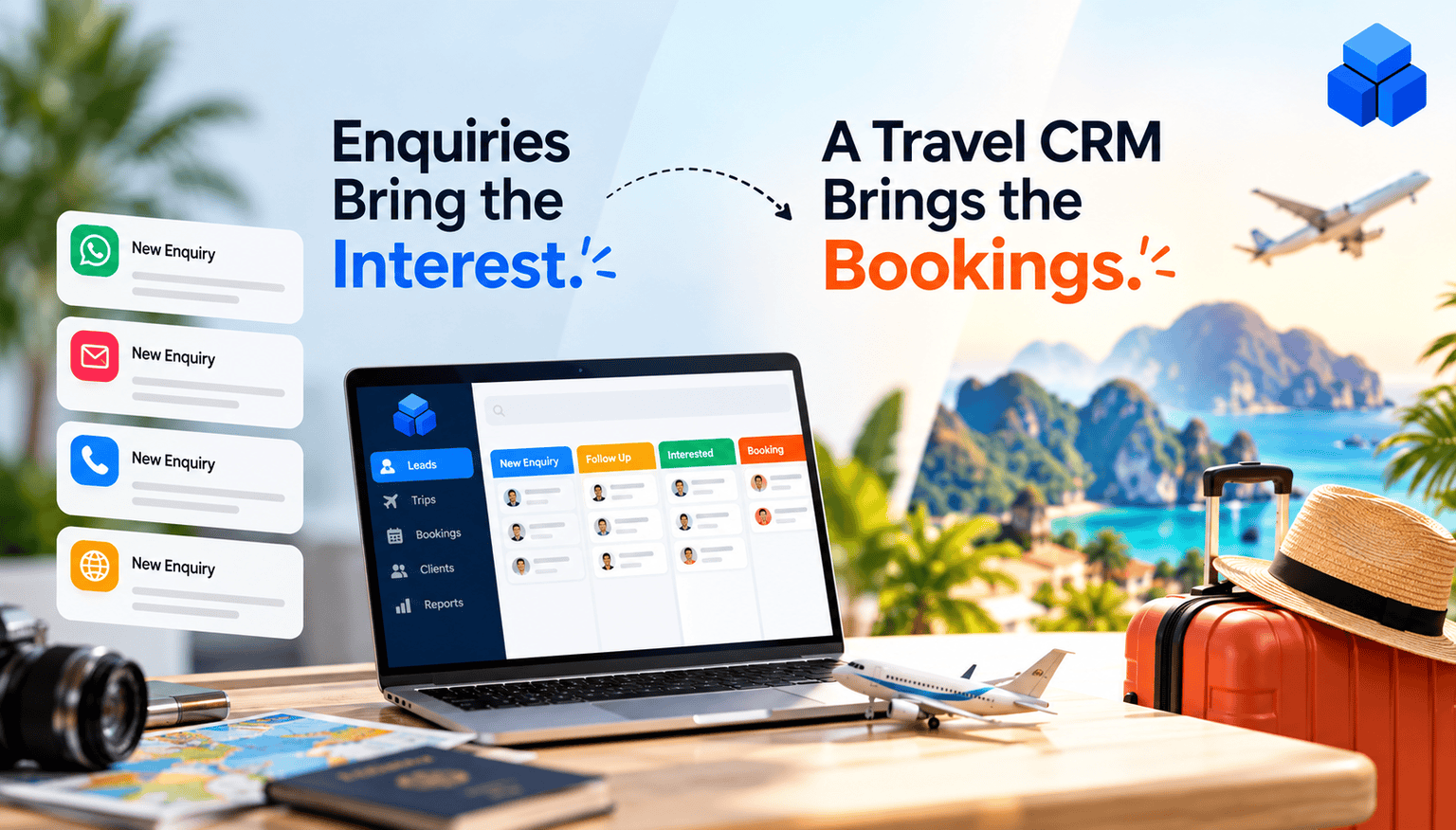
A travel CRM puts everything in one shared place that belongs to your agency, not to any individual. Every enquiry, conversation, quote, payment and document sits inside the client’s profile, with a clear history of who did what and when.
Now imagine that same Monday morning again.
Your executive resigns. You open the CRM, reassign her leads to a teammate in a few clicks, and the new person sees everything: the Maldives couple’s preferences, the advance payment, the pending visa documents and the follow-up scheduled for Thursday. The client gets a smooth experience and never knows a thing changed behind the scenes.
That’s the difference between losing a team member and losing your business memory.
Not every CRM suits a travel business. Look for one that offers:
With Trevion CRM, all of this lives in one place, built specifically for travel and real estate businesses. You stay in control of who can view, edit or export your data, so your client information stays safe while your team stays productive. Still comparing options? See how Trevion stacks up against HubSpot for travel agencies.
Technology helps, but a few simple habits make it stronger:
These take very little effort but save a lot of stress later.
Great executives will come and go. That’s normal in any industry, and travel is no exception. What shouldn’t change is your access to your clients, your history with them and the trust you’ve built over years.
Build your agency on a system, not on one person’s phone. Then the next resignation email will feel like a normal Monday, and not a crisis.
Picture two travel agencies. Same city, same season, same star executive handing in the same resignation.
In the first agency, the owner spends the week calling clients, asking, “Sorry, can you remind me what was planned?” A few clients are patient.
A few quietly book somewhere else.
In the second agency, the owner reassigns the leads before lunch. By evening, the new executive has already sent a friendly update to the Maldives couple, with their dates, their advance and their visa checklist right there on screen.
The only difference between the two? One of them knew where its data lived.
So here’s a small test for today: if your best person left tomorrow, how much of your business would still be sitting in your hands?
If the answer made you a little uncomfortable, that’s a good sign. It means you’re ready to fix it.
The business owns it. But if the data sits on personal phones and private chats, the business has little real control over it. A shared CRM keeps your client records in company-owned systems.
It stores every enquiry, quote, payment and document in one place. You can reassign leads in a few clicks, remove the person’s access instantly and let a teammate continue without losing context.
Yes. With role-based access, you decide who can view, edit or export data, so sensitive details like passport copies and payment records stay with the right people.
Not at all. Whether you run a small agency or work as a tour operator or travel consultant, you probably depend on one or two key people. A CRM gives you a safety net without needing a big team.
Most agencies can import their existing contacts and start using a CRM within days. The best approach is to begin with new enquiries, then move older client data over gradually.

Tired of losing track of your leads? Automate follow-ups, capture inquiries instantly, and accelerate conversions with Trevion CRM.
Get the latest expert sales tips, workflows, and CRM insights to grow your business.