Insights & Resources
Read Our Blogs
Helpful blogs, expert sales tips, and CRM guides written by industry specialists to help grow your business.
Helpful blogs, expert sales tips, and CRM guides written by industry specialists to help grow your business.
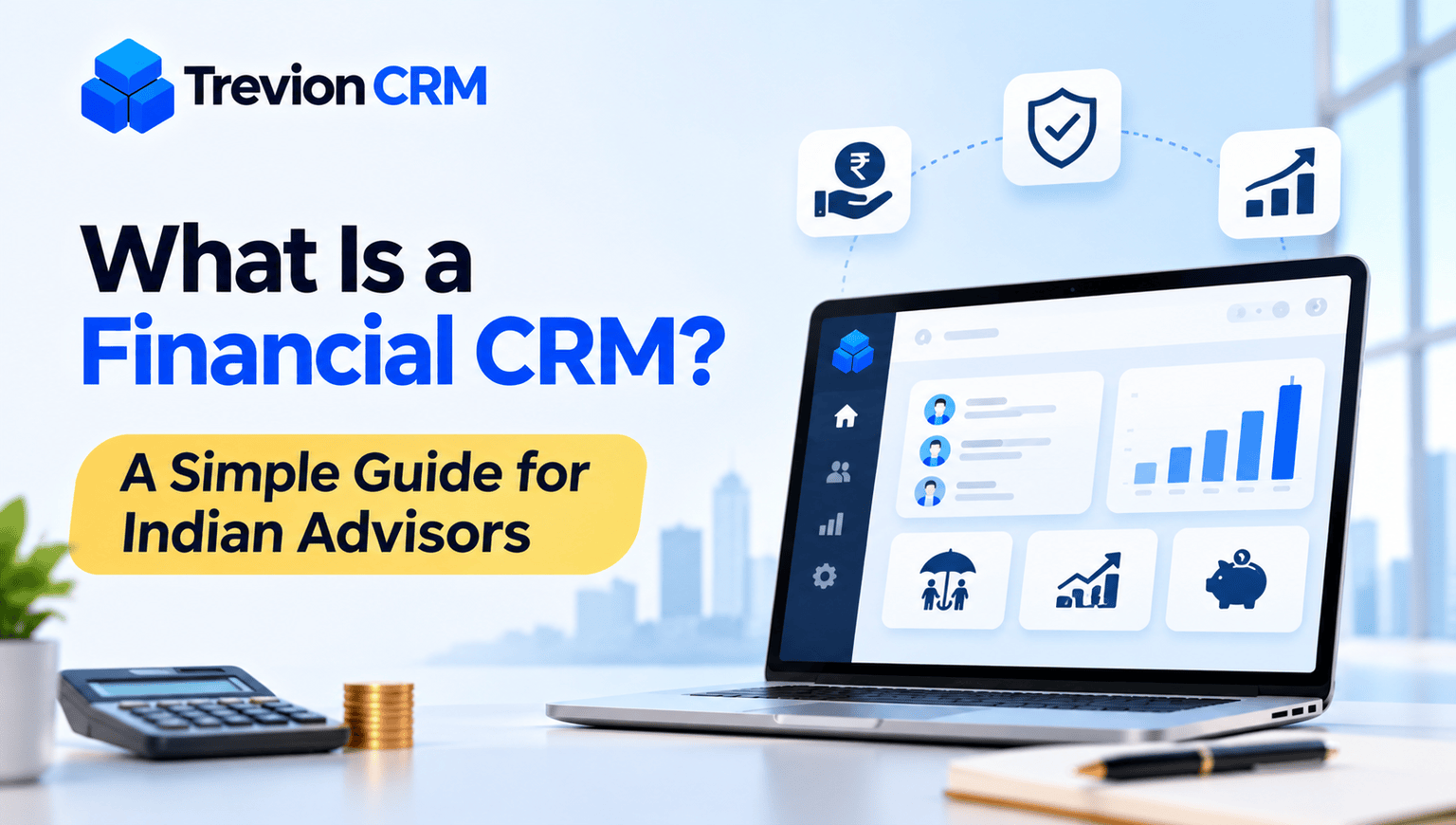
A Financial CRM is software that keeps your client details, SIP dates, policy renewals and follow-ups in one place. If you work as an advisor in India, you already know how much there is to remember. And most of us still handle it with Excel sheets, diaries and a very crowded WhatsApp.
That setup works when you have 30 clients. It gets messy at 150. This guide explains what a Financial CRM is, what it actually does day to day and how to choose one without wasting money.
CRM stands for Customer Relationship Management. A Financial CRM is the same idea, but built for people who sell or manage financial products like mutual funds, insurance, loans and stocks.
Instead of searching through files and chats, you open one screen and see what needs your attention today. Which client’s policy is due?
Whose SIP is about to end? Which lead is still waiting for a call back? That’s what it’s for.
Nothing is wrong with Excel. It’s just not made for this job. Here’s where it starts to struggle:
One missed SIP renewal or premium date can make a client feel ignored. That’s hard to fix later.

Here’s what you can expect from a good one:
Say you have 200 clients and 60 active SIPs. Every month, a few SIPs come up for renewal, some insurance premiums fall due and new leads need a call. With Excel, you check multiple sheets to find all this. With a Financial CRM, you open one dashboard, see the day’s tasks listed and view each client’s history right next to it.
If you have more than a few dozen clients and want to grow, a CRM can take a lot of manual work off your plate.
A general CRM can store contact details, but it doesn’t understand your business. A CRM designed for Indian financial advisors already knows about SIP schedules, policy renewals, family members linked to one client and product-wise tracking. With a general tool, you’d have to set all of that up yourself.
You handle people’s financial details, so safety matters. India’s Digital Personal Data Protection (DPDP) Act, 2023 expects businesses to treat personal data responsibly. SEBI and AMFI also expect distributors and advisors to keep proper client records. A good CRM helps with both through secure storage, access controls for your team and organised records that are easy to find when you need them.
Keep these points in mind while comparing options:
It’s probably time if:
Start small. Even just using reminders and lead tracking can make a visible difference in the first month.
A Financial CRM won’t replace your experience or your advice. It just handles the routine work around them. When reminders and follow-ups run on their own, you get more time for the conversations that actually grow your business.
Want to see how it works for your practice? Book a free demo and try it yourself.
No. Individual advisors and small teams often gain the most, since one person is usually doing everything.
Reputable CRMs use secure servers, login controls and backups. Ask the provider how data is stored and who can see it.
Mostly, yes. You can import your existing data and manage it all in one place.
No. Good CRMs are made for everyday users, not IT teams.
It depends on the provider, the number of users and the features. Many offer monthly or yearly plans, so ask for a demo and a clear price list before you decide.

Tired of losing track of your leads? Automate follow-ups, capture inquiries instantly, and accelerate conversions with Trevion CRM.
Get the latest expert sales tips, workflows, and CRM insights to grow your business.