Insights & Resources
Read Our Blogs
Helpful blogs, expert sales tips, and CRM guides written by industry specialists to help grow your business.
Helpful blogs, expert sales tips, and CRM guides written by industry specialists to help grow your business.
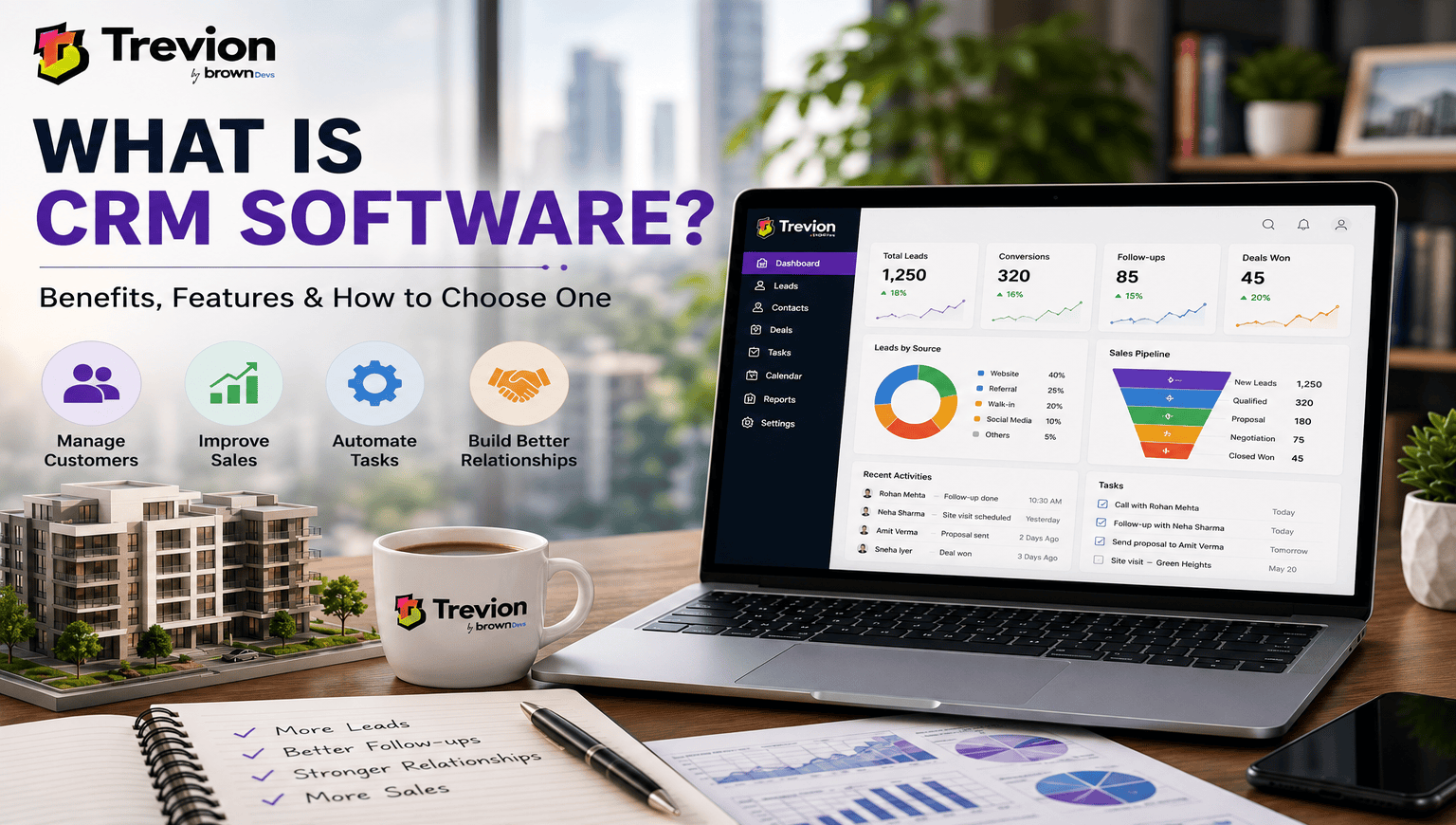
Running a business means dealing with customers every day. You have to manage leads, answer questions, follow up on inquiries, and keep track of every conversation. Doing all this manually can become difficult as your business grows.
That's where CRM software comes in. It helps businesses stay organized, save time, and provide a better experience to customers.
Let's understand what CRM software is, why it is important, and how to choose the right one.
CRM stands for Customer Relationship Management. It is software that stores customer information, tracks interactions, and helps businesses manage their sales process.
Instead of using notebooks or multiple Excel files, a CRM keeps everything in one place. Your team can quickly check customer details, see previous conversations, schedule follow-ups, and monitor sales progress.
For businesses like real estate, where managing leads is a daily task, using a dedicated Real Estate CRM can make the entire sales process much more organized.
A CRM is more than just a place to store customer details. It helps businesses work smarter and improve customer relationships.
Some of the biggest benefits include:
Whether your business is small or large, a CRM helps your team stay organized.
Different CRM platforms offer different features, but most include the following:
Store and organize all customer inquiries in one place.
Never miss an important customer follow-up.
Track every lead from the first inquiry to the final sale.
Understand your team's performance with easy-to-read reports.
Allow everyone to access updated customer information without confusion.

Not every CRM is the right fit for every business. Before choosing one, think about your daily work and future goals.
Here are a few things to consider:
Every industry has different needs. For example, builders and developers benefit from a CRM for Builders and Real Estate Developers because it includes features like lead management, site visit tracking, and project management.
A CRM should make work easier, not more complicated. Choose software that your team can learn quickly.
Good CRM software should automatically remind your team about follow-ups, assign leads, and generate reports.
Choose a CRM that can grow with your business. As your customer base increases, your CRM should continue to support your needs.
Many businesses start by managing customer details manually. But as sales increase, manual work becomes difficult to handle.
CRM software helps businesses save time, improve customer service, and make better business decisions through organized data and automated workflows.
That's why companies across industries are adopting CRM solutions to improve productivity.
CRM software is no longer just for large companies. Businesses of every size can benefit from using a CRM to organize customer information, manage leads, and improve follow-ups.
Before choosing a CRM, focus on your business needs, ease of use, and the features that will help your team work more efficiently.
Investing in the right CRM software today can help your business build stronger customer relationships and achieve long-term growth.
CRM software helps businesses manage customer information, track leads, schedule follow-ups, and improve customer relationships.
CRM software is useful for businesses of all sizes, including real estate, education, healthcare, travel, and retail.
Choose a CRM based on your business size, industry, ease of use, features, and future growth requirements.

Tired of losing track of your leads? Automate follow-ups, capture inquiries instantly, and accelerate conversions with Trevion CRM.
Get the latest expert sales tips, workflows, and CRM insights to grow your business.